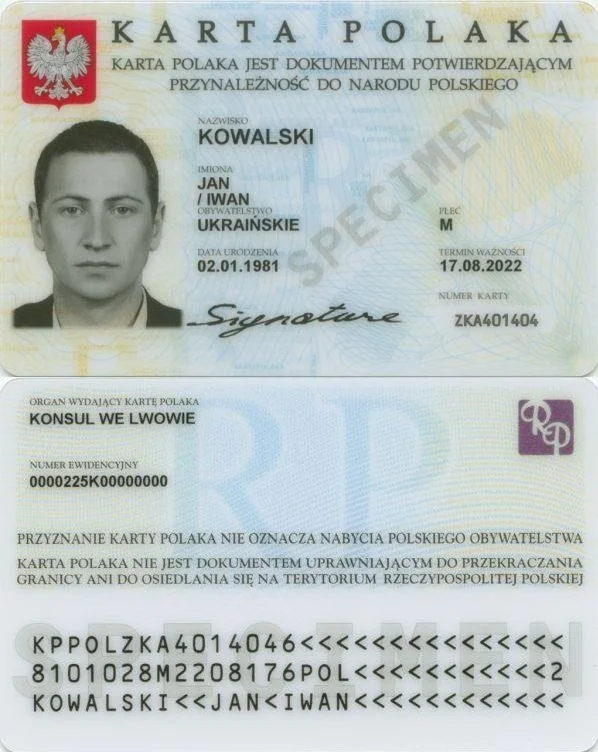
The Karta Polaka (Pole’s Card)
Last updated: July 20, 2026.The Karta Polaka, or Pole's Card, is a document issued by the Polish government that confirms a person's belonging to the Polish nation. It is not citizenship and does not grant a passport. Since a July 2019 amendment, it is open to people of Polish origin in any country worldwide, including the United States and Canada. Applications are made in person at a Polish consulate.
Key Benefits:
Residence and Work Permits in Poland.
Free Education and Emergency Health Care
A ‘Fast-Track’ to citizenship after residing in Poland for 12 months (language proficiency required)
PolandPassport.com can help you at all stages of this process including help with the exam and language proficiency. Our partners have a variety of online courses and the ability to help prepare your application. Contact us for more details!
Can Americans and Canadians Apply for the Karta Polaka?
Yes. Since the July 2019 amendment, citizens of the United States and Canada with Polish ancestry can apply for the Karta Polaka. Before 2019, the program was restricted to former Soviet states, so American and Canadian applicants were excluded. Today they apply on the same terms as everyone else, at the Polish consulate serving their region.
The requirements are the same for all applicants regardless of country: documented Polish ancestry or active involvement in Polish culture, basic Polish language ability, and an in-person interview before a Polish consul.

History and Purpose of the
Karta Polaka (Pole's Card)
The Karta Polaka (Pole's Card) was established in 2008. This law was introduced to support individuals of Polish origin who, due to historical circumstances, found themselves outside Poland's borders and for those ineligible for citizenship by descent.
The law recognizes the moral obligation of the Polish state to support Poles living outside Poland and others who feel a sense of Polish national identity, regardless of citizenship. The Karta Polaka (Pole's Card) confirms membership in the Polish Nation but does not grant citizenship automatically. However, there is a ‘fast track’ to citizenship for those who obtain the Pole’s Card and live in Poland for 12 months.
Am I Eligible?
To obtain a Karta Polaka (Pole’s Card), applicants must meet specific criteria, primarily centered on their Polish heritage, language proficiency, and cultural connection.
It is important to note that individuals applying for the Karta Polaka (Pole’s Card) cannot already hold Polish citizenship or a permanent residence permit in Poland. Stateless individuals are also ineligible.
Key requirements include:
Cultural and Language Connection: Applicants must demonstrate a connection to Polish culture, including passing a test on their knowledge of Polish traditions, customs, and history. You must also speak Polish at a basic conversational level, assessed during an in-person interview with a Polish consul.
Proof of Polish Descent or participation in Polish cultural activities: Applicants must prove that they have at least one parent or grandparent, or two great-grandparents, of Polish nationality. Alternatively, active involvement in Polish organizations or cultural activities for at least three years can suffice.
Declaration of Belonging: In addition to the in-person test, in the presence of a Polish consul, applicants must submit a written declaration affirming their belonging to the Polish nation.
Benefits of the Karta Polaka (Pole’s Card)
While the Karta Polaka (Pole’s Card) does not automatically grant Polish citizenship, it offers several valuable benefits.
Visa-Free Travel: Holders can obtain a long-term national visa, allowing repeated entry into Poland without the need for additional documentation or consular fees.
Residence and Work Permits: Once in Poland, holders can quickly apply for residence and work permits.
Free Access to Services: The card allows free access to education, including university and doctoral studies, and emergency healthcare services in Poland.
Business and Settlement Benefits: Holders can run a business in Poland and are entitled to settlement cash benefits.
Pathway to Citizenship: The Karta Polaka (Pole’s Card) provides a fast-track route to Polish citizenship after 12 months of residing in Poland, though this is distinct from the grant of citizenship process.
Discount on public train travel: Holders can get up to 37% discount on public train travel.
Museum Entry: The card allows free entry to state museums
Visa Fees: The Karta Polaka allows for waived national-visa fees
Karta Polaka vs Polish Citizenship by Descent
If you qualify for Polish citizenship by descent, that is almost always the stronger route, because it grants a Polish passport and full EU citizenship. The Karta Polaka is the alternative for people with Polish roots who do not qualify for citizenship by descent. It confirms Polish heritage status and opens a residence-based path toward citizenship later.
A simple way to decide: confirm whether you have an unbroken line of Polish citizenship to a qualifying ancestor first. If you do, pursue citizenship by descent. If that line is broken or cannot be documented, the Karta Polaka may be the better fit.
How Do I Apply for the Karta Polaka?
You apply in person at the Polish consulate that serves your area. You book an appointment, bring your supporting documents, sit a short interview on Polish language and culture, and submit a signed declaration of belonging to the Polish nation. The consul reviews your ancestry or cultural ties and your overall Polish connection before deciding.
Note that translation rules and appointment procedures vary by consulate, so check the specific consulate's site.


How can PolandPassport.com help?
We will connect you with our trusted partners who can help you gain a strong knowledge of Poland, Polish traditions and customs, and basic Polish language skills via online learning.
They will accompany you every step of the way with guidance on how to pass the language and history test at your consulate.
Contact us to learn more!
Karta Polaka FAQ
Is the Karta Polaka the same as Polish citizenship?
No. The Karta Polaka confirms your belonging to the Polish nation, but it is not citizenship and does not grant a Polish passport. It does provide a fast-track route to citizenship after 12 months of residence in Poland.
Can a US citizen get a Karta Polaka?
Yes. Since the July 2019 amendment opened the program worldwide, US citizens of Polish descent can apply at the Polish consulate serving their region, on the same terms as all other applicants.
Can a Canadian citizen get a Karta Polaka?
Yes. Canadian citizens of Polish origin became eligible under the 2019 expansion and apply through the Polish consulate responsible for their region.
How do I apply for the Karta Polaka?
You apply in person at the Polish consulate that serves your area. You book an appointment, bring your supporting documents, sit a short interview on Polish language and culture, and submit a signed declaration of belonging to the Polish nation. The consul reviews your ancestry or cultural ties before deciding.
How long is the Karta Polaka valid, and can it be renewed?
The Karta Polaka is valid for 10 years. For a minor, the card expires one year after they turn 18. For applicants over 65, it is issued indefinitely. You can renew it for another 10 years, provided you file the renewal application at least 3 months before it expires. The card becomes legally invalid the moment the holder obtains Polish citizenship or a permanent residence permit, and the physical card must be returned.