Could your Polish heritage help you gain an EU Passport?
You already know that EU citizenship allows you to live, study, work, own property, and retire in any European Union country. When you secure Polish citizenship, you become a citizen of the EU — unlocking those rights for yourself and, in many cases, for your children and grandchildren.
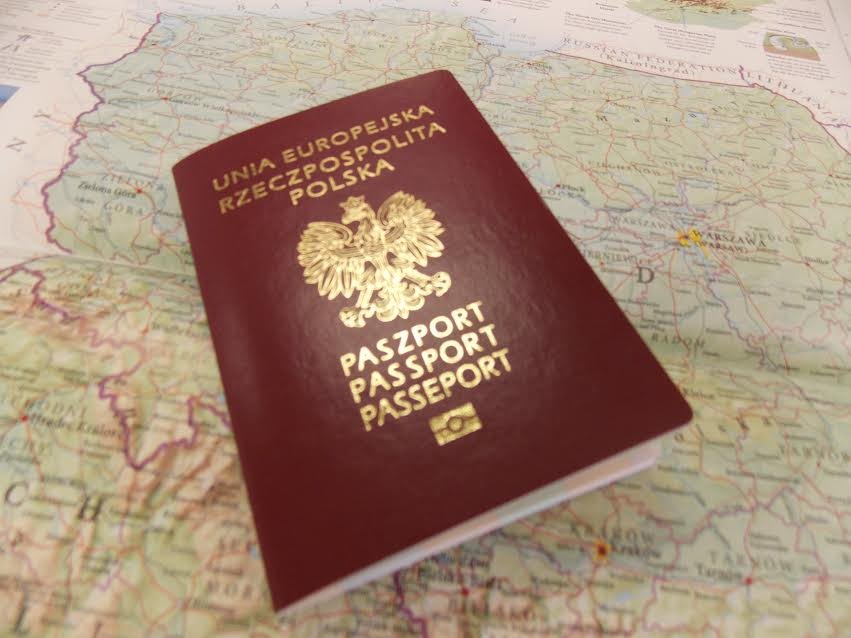
If you have Polish ancestry, you may be eligible to have your Polish citizenship legally confirmed. Once confirmed, you can apply for your Polish passport.
Confirmation of Polish citizenship takes place after the Polish government issues an official Citizenship Decision on your behalf. Those born outside Poland need to verify whether their Polish citizenship is still intact before applying.
How Do I Know If I Qualify for Polish Citizenship?
While the rules can be complex, here is a simplified overview. There are additional scenarios, but this pathway is the most common.
First, you must have at least one Polish ancestor. That ancestor must have been born in Poland (or in territory that was historically Poland) and lived there after 1920. You must also be able to prove that this ancestor held Polish citizenship at some point after 1920.
Proving your ancestor’s citizenship can be done in several ways (often through original Polish documents such as birth records, marriage records, old passports, voting registers, or military documents). Many of our clients begin with a handful of these records. Our research team works with archives across dozens of Polish cities and towns to “fill in the gaps.” Roughly 80% of clients require additional original documents from Polish archives to prove their lineage and citizenship status.
Polish citizenship law includes many twists, turns, and exceptions. There are numerous situations that can disqualify someone from maintaining citizenship, including serving in a foreign military, holding certain public offices outside Poland, or cases involving adoption.
For example, you must show that your ancestor did not lose Polish citizenship by accepting public employment abroad. Teachers, civil servants, and other publicly funded roles may fall under this category. This is just one of many possible exceptions.
To qualify, you must prove an unbroken chain between yourself and your Polish citizen ancestor. Establishing this chain with original Polish documents is essential to confirming your citizenship.
Every family’s history is different, and so is the path to Polish citizenship by descent.
We personally review each case to give you a clear, straightforward assessment of your eligibility. Your first check is completely free, with no obligation to continue unless you decide to take the next step toward a Polish passport and EU citizenship.
-

Take Our Free Polish Citizenship Eligibility Quiz
Answer a few quick questions about your Polish ancestry and family history. This helps us determine whether you may qualify for Polish citizenship and an EU passport.
-

Get Your Personalized Assessment
Within a few business days, we’ll review your answers and email you an honest evaluation of your eligibility. If you might qualify, we’ll outline the process, timeline, and benefits of securing Polish citizenship by descent. There’s no obligation to proceed.
-

Let Us Handle the Entire Process
If you choose to move forward, we’ll take care of all the complex legal and administrative work for you — making your path to a Polish passport smooth, stress-free, and efficient.

Genealogy Tips to Speed Up
Your Application
Start With Yourself — Write down your full name, date and place of birth, and details for your parents, spouse, and children (if applicable). Include marriage dates and places. Then move on to your parents, grandparents, and earlier generations.
Create a Family Tree — A family tree helps you visualize relationships and spot missing information. You can use a spreadsheet, a genealogy program, or simply sketch it out by hand. Start with names, dates, and places, adding details as you find them.
Check Family Documents — Search through family papers, photographs, and keepsakes. Look for clues in certificates (birth, marriage, death), naturalization papers, passports, military records, or even inscriptions on photos and envelopes. Small details often unlock big discoveries.